The onboarding process has become increasingly important in times of skilled-labour shortages. How new employees are welcomed, introduced, trained and integrated has a major influence on their development, the working atmosphere and, ultimately, employee retention. Onboarding, in other words bringing someone “on board”, usually begins when the employment contract is signed and ends with the probationary period, although it can continue beyond that point. A structured onboarding process should not only familiarise new starters with their role but also integrate them socially. The following sections explain the main phases and common measures involved in onboarding. You will also learn how to measure satisfaction with the onboarding process and improve it using feedback surveys.
Table of Contents
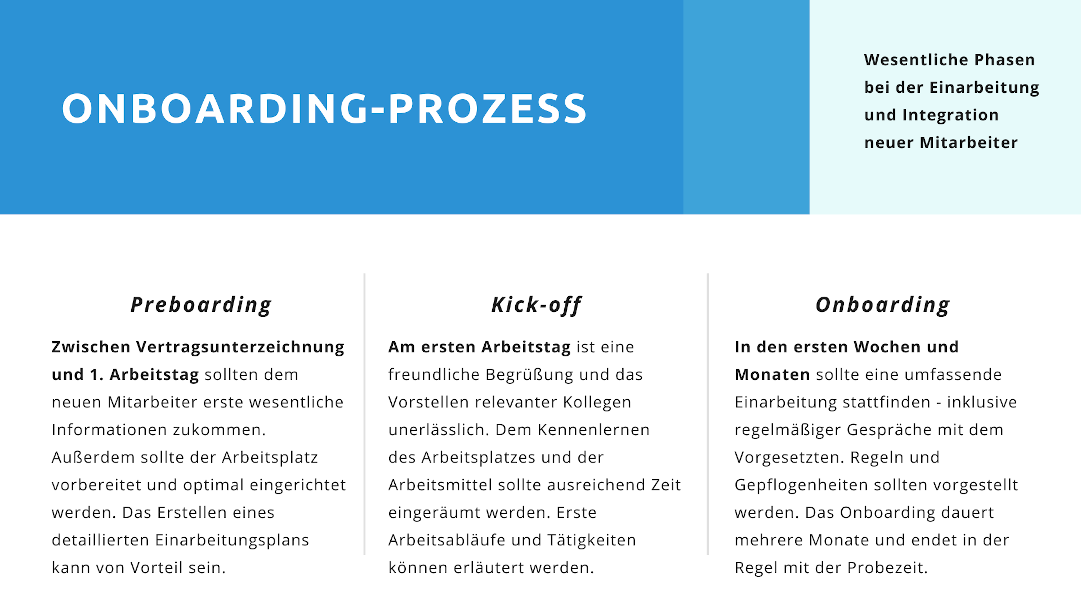
3 Key Phases of the Onboarding Process
1. Preboarding: From Signing the Contract to the First Day at Work
Onboarding usually begins when the employment contract is signed, although it can also be considered as early as the recruitment and interview process. After all, the aim is to convince new employees that they have chosen an attractive workplace and to build a strong connection with the company as quickly as possible. New starters should receive key information before their first day, such as details of contacts and points of contact, the company’s mission and values, and what to expect on their first day.
The workplace should also be fully prepared and equipped with the necessary tools before the employee starts. Depending on the role, the IT department should make the necessary arrangements in advance, such as setting up intranet and email access, connecting printers and providing the required software. A detailed induction plan with clearly assigned responsibilities can support a structured integration process. This systematic approach is particularly useful for organisations that regularly recruit new employees.
Onboarding usually starts when the employment contract is signed, but it can begin as early as the job advertisement and recruitment process. Communicate the strengths of your organisation early and create a welcoming culture that gives applicants and new starters a positive first impression.
2. Kick-off: The First Day at Work
A warm welcome on the employee’s first day should be a given. A detailed welcome meeting, ideally with their manager, a tour of the office or site, and introductions to relevant colleagues should also form part of the first day. If a buddy or mentor has been assigned, they will usually take responsibility for the initial introduction.
If this has not already been covered, the employee should be told who their key contacts are, how to reach them and which departments to approach for specific matters, such as HR or IT support.
Allow enough time for the new employee to become familiar with their workplace and with the communication channels used in the organisation, starting on the first day and continuing beyond it.
Initial workflows and areas of responsibility can also be explained so that the new employee can begin to understand what their day-to-day work will look like.
3. Onboarding: The First Weeks and Months in the New Role
A thorough, structured induction during the first few weeks lays the foundation for the new employee’s professional development. To make that foundation sustainable, onboarding should cover not only the role itself but also social and cultural integration. Alongside technical and professional details, explain the organisation’s rules and working practices, involve new employees in teams or working groups and foster a collegial, supportive environment. Respectful and appreciative interaction should be standard.
Regular feedback meetings in which expectations and goals are discussed should accompany the onboarding process. The overall process may last several months and usually runs through the probationary period, supported by a range of onboarding measures.
Onboarding Measures
Onboarding measures are designed to make it easier for new employees to settle in, support their integration and help them identify with the organisation quickly. As a rule, a stronger welcoming culture also supports motivation and engagement among new employees.
Common onboarding measures that can be used throughout the process include:
Onboarding Feedback: Questionnaire Template for Measuring Satisfaction
To improve the onboarding process, first find out how satisfied new employees are with the process so far and where they see weaknesses. This can be done through feedback meetings or, particularly when several employees are being onboarded, through online surveys that reduce the time required. Online onboarding surveys are efficient and can also make it easier for new employees to respond openly than in a direct conversation with their manager.
When creating an online survey, you can use our free “Onboarding” questionnaire template as a starting point. Copy it to your LamaPoll account with one click and adapt it as required.
Employee satisfaction with onboarding can be measured using a set of questions covering the relevant aspects of the induction process. The approach is similar to a conventional employee satisfaction survey. The questions should cover all onboarding phases the employee has already completed so that weaknesses and opportunities for improvement can be identified. Alongside predefined response options, include comment or free-text fields to gather additional relevant information. This gives new employees an opportunity to add detail, make suggestions and raise criticism where necessary.
Use employee surveys regularly to build a picture of sentiment across the workforce, identify developments and take appropriate improvement measures where needed.
Onboarding as Part of Employer Branding
Onboarding can also play an important role in employer branding. New employees who are satisfied and feel that their feedback is taken seriously can become advocates for the organisation, strengthen its position as an attractive employer and support recruitment in a competitive labour market. Many specialists and managers considering a job move research prospective employers in advance, including on forums and employer review platforms. Positive recommendations from current employees and favourable comments about the welcoming culture and onboarding process can increase interest in the organisation and influence the decision to join.
A strong onboarding process can also help new starters identify with the organisation’s goals early on and strengthen their long-term commitment to the company. This can reduce recruitment costs that would otherwise arise when employees leave and vacancies have to be filled again.
Employer branding aims both to attract employees and to support long-term employee retention. A high-quality onboarding process can contribute to both goals.
For more detailed information about employer branding in HR, see this study by the University of Bamberg: Employer Branding study.
Intercultural Onboarding: Tips and Integration Measures
In addition to the standard onboarding described above, employees joining from abroad may benefit from intercultural onboarding with additional integration measures. For specialists and managers relocating from another country, onboarding should identify contacts not only for work-related matters but also for social and practical issues. Support with finding accommodation, childcare or schools can be useful before the employee arrives. The career prospects of accompanying family members may also need to be discussed.
Employers should try to remove practical obstacles so that employees relocating from abroad can settle in quickly and focus on their work. A buddy or mentor can help them during this initial period. A welcome pack listing key arrangements and contacts can also provide useful support. Give employees who have relocated the information they need and explain important processes and structures clearly. Finally, check in regularly to find out whether anything remains unclear.
A well-designed intercultural onboarding process provides a basis for successfully integrating employees from abroad into the team. An online survey can be used to evaluate whether the onboarding process met their needs. The onboarding survey should give new employees an opportunity to identify shortcomings and suggest changes or improvements.
What is LamaPoll?
LamaPoll is a survey tool for creating employee surveys and measuring employee satisfaction. You can use it to create, conduct and analyse all types of employee survey. Create your employee survey in just a few steps, apply your organisation’s corporate design and invite employees conveniently by email or via your intranet. You can quickly gain insights that help improve employee satisfaction. You can register for our survey tool free of charge and immediately conduct surveys for up to 50 employees with no obligation. If you need more responses to your online employee survey questionnaire, simply choose one of our monthly plans. You can also use our employee survey questionnaire templates and examples.