
A pulse check gives you a quick, up-to-date picture of how your employees feel, but the method has its limits. A SWOT analysis shows both at a glance: the strengths and weaknesses of the method, and the opportunities and threats when you put it into practice. That way you know what to watch out for before you start.
What is a SWOT analysis? SWOT stands for strengths, weaknesses, opportunities and threats. The SWOT analysis is a strategic planning method and an important tool in market research. The internal analysis identifies an organisation’s strengths and weaknesses; the external analysis of the market and wider environment identifies its opportunities and threats.
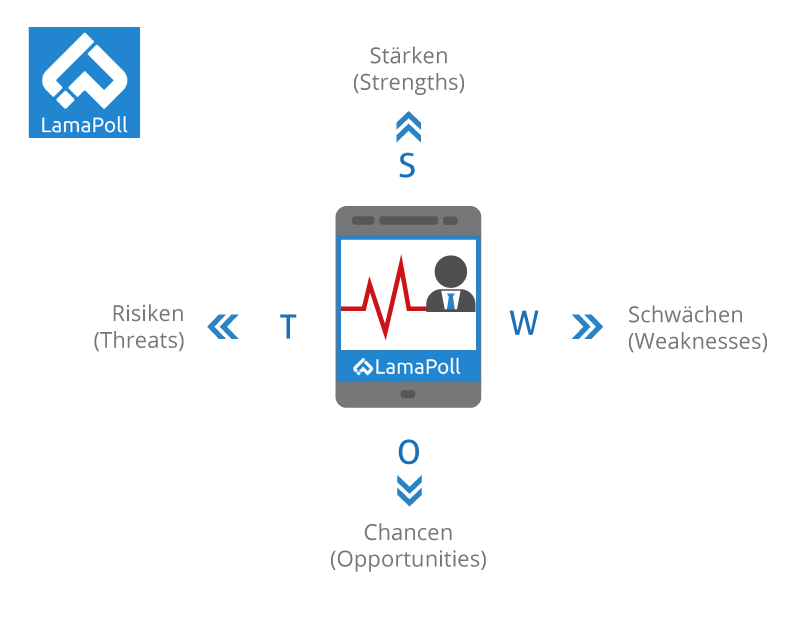
Pulse check: SWOT analysis
Offsetting the weaknesses
- Survey fatigue: Keep each pulse check short, with 5–10 questions, and stick to a fixed monthly rhythm.
- Cyclical fluctuations: Individual scores can vary with the season or current events. Look at trends over several months rather than single results.
- Few actionable insights: General questions give you little to act on. Ask targeted questions on a clearly defined topic and add a free-text field for suggestions.
Avoiding the threats
The biggest risks come after the survey. Share the results promptly with all respondents and state clearly what actions will follow. Only promise what you can deliver: if announced improvements fail to materialise, motivation drops, and so does participation in the next pulse check. Clearly worded questions help prevent half-hearted or ambiguous feedback.
To find out how to share results and assign responsibilities, see the pulse check process.
Next step: Put your pulse check together with our sample questions and prepare it using the pulse check checklist.