
A materiality assessment helps companies identify the sustainability matters that are most relevant to the business and its stakeholders and provides a basis for sustainability reporting. As a strategic analysis method, a materiality assessment also offers clear benefits for companies that are not required to report on sustainability. It can be carried out efficiently using an online questionnaire. This page explains materiality assessments in sustainability management, outlines their benefits and provides a questionnaire template.
Table of Contents
What is a materiality assessment?
A materiality assessment is carried out by companies as part of sustainability management. It supports CSR communication and, in many cases, forms the basis for mandatory sustainability reporting. The most material sustainability matters are generally assessed both internally, within the company, and among key external stakeholders through a stakeholder survey. Both perspectives are then combined in a materiality matrix.
Materiality assessments are increasingly used by companies of all sizes as a strategic method for identifying both the company's impacts on the environment and the ways in which environmental factors can affect the company. The assessment can help companies identify future areas for action and new business opportunities. Sustainable business practices are also becoming more important as a purchasing criterion for consumers. Conducting a materiality assessment can therefore be useful for companies of any size.
A typical materiality assessment process:
- External environment analysis: analyse external factors over which the company has little or no influence, such as economic, environmental and political factors
- Company analysis: analyse internal factors such as the business model, product and service portfolio and value chain to identify strengths and weaknesses
- Combine the external environment and company analyses, for example using a SWOT analysis
- Classify the topics and consolidate them into a shortlist
- Stakeholder analysis: create an online questionnaire containing the shortlisted topics and ask stakeholders to assess their relevance
- Invite internal and external stakeholders to take part in the online survey
- Where appropriate, supplement the online survey with interviews with internal and external stakeholders
- Analyse the results and create a materiality matrix
- Publish the findings as part of the sustainability strategy
Conduct a materiality assessment with an online questionnaire
A materiality assessment can be carried out using an online questionnaire. An online materiality survey is a time- and cost-efficient way to ask internal stakeholders, such as employees, and external partners to assess sustainability matters that are relevant to the company. A materiality assessment questionnaire is generally preceded by an external environment analysis and a company analysis carried out by management and sustainability experts. The resulting topics can then be included in an online questionnaire and sent to internal and external stakeholders for assessment and prioritisation.
Our online survey tool makes it easy to conduct a materiality assessment in your company's corporate design. LamaPoll allows survey creators to survey several target groups, both internal and external, within a single survey. There is no need to create a separate survey for each group. The internal and external perspectives that characterise a materiality assessment can be handled within one survey using logic functions. For example, a filter question at the beginning can identify whether a respondent belongs to an internal or external stakeholder group. Respondents then see only the questions relevant to their group. Result filters allow survey creators to analyse the internal and external groups separately.
Materiality assessment questionnaire template
Use our materiality assessment questionnaire template as a starting point. The template is available free of charge. Select “Use” to copy it to your LamaPoll account, where you can adapt it to your organisation and assessment requirements.
Our survey template covers both the internal and external perspectives. Employees and external stakeholders can be surveyed within a single questionnaire. The central question is which sustainability matters are most material to the company. Once selected, these matters can be assessed in terms of their environmental sustainability impacts. The assessment can also be extended and adapted to cover social and economic sustainability.
For many companies, the EU Corporate Sustainability Reporting Directive (CSRD) requires a double materiality assessment that considers both the inside-out and outside-in perspectives. Questionnaire templates are available here: Conduct a double materiality assessment: questionnaire templates. For general information on double materiality, see: Double materiality assessment: definition & example templates.
Supplier selection plays an important role in sustainability management for many companies. A supplier self-disclosure questionnaire can be used to pre-screen and assess suppliers. Find further information and a questionnaire template here: Supplier self-disclosure: definition, template & tips
Materiality assessments in sustainability reporting
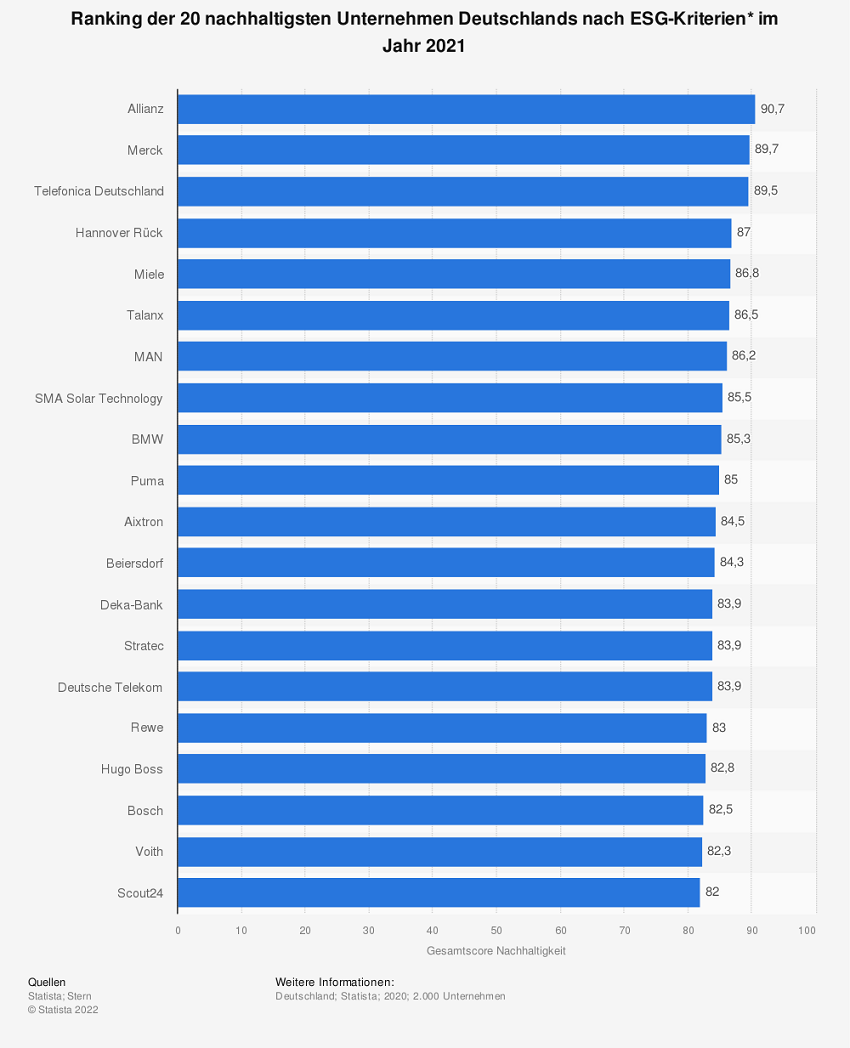
Materiality assessments are generally carried out as part of sustainability reporting, which is subject to specific legal requirements. A non-financial reporting requirement has applied in Germany and the EU since April 2017. Germany's CSR Directive Implementation Act (CSR-RUG) applies to listed companies with more than 500 employees. CSR reporting requirements also apply to banks, insurance companies and investment fund companies, regardless of whether they are listed. The CSR Directive Implementation Act requires these companies to disclose information on non-financial matters, including environmental, employee and social matters, respect for human rights, and the prevention of corruption and bribery (§ 289c HGB). Companies can use a range of national, European and international standards for reporting and may choose the standard on which their reporting is based. International frameworks include the Global Reporting Initiative (GRI, 2006), whose sustainability reporting guidance explicitly calls for a materiality assessment.
 Study on Statista
Companies that are not currently required to publish sustainability reports can still do so voluntarily and can conduct the underlying materiality assessment. This can offer opportunities in several areas, including employer branding. Companies that communicate their sustainability responsibilities transparently may improve their prospects of economic growth and attract employees who value a sustainable employer.
Small and medium-sized enterprises (SMEs) should keep sustainability reporting and materiality assessments on their radar, as reporting requirements are continuing to evolve. At European level, the Corporate Sustainability Reporting Directive (CSRD) sets requirements for sustainability reporting by European companies. Further information is available from the German Council for Sustainable Development: Key points for future sustainability reporting by SMEs
What are the benefits of a materiality assessment?
Conducting a materiality assessment takes time and effort, but it can deliver benefits even for companies that are not required to report on sustainability. The process can identify weaknesses in sustainability management and highlight opportunities for process or product improvements. A materiality assessment can also support employer branding. Communicating a sustainability strategy externally can strengthen the employer brand and help attract new talent.
Benefits of a materiality assessment at a glance:
- Identify and address weaknesses in sustainability management
- Identify opportunities to optimise processes and products
- Increase transparency and credibility
- Strengthen employer branding
- Attract customers and employees who value sustainability
Please note: since 5 January 2023, the EU Corporate Sustainability Reporting Directive (CSRD) has required certain companies to apply the principle of double materiality when identifying sustainability matters. Find out more here: Conduct a double materiality assessment

With LamaPoll, surveys can be created quickly and easily. The tool offers many options for individual adjustments. The help pages are useful for solving many questions independently. For special requests, competent and easily accessible customer support is available.
What is LamaPoll?
LamaPoll is a survey tool for creating employee surveys and employee satisfaction surveys online. You can create, conduct and analyse all types of employee surveys with LamaPoll. Create your employee survey in just a few steps, adapt it to your company's corporate design and invite employees conveniently by email or via your intranet. This allows you to gather insights that can help improve employee satisfaction. You can sign up for free and immediately run surveys for up to 50 employees with no obligation. If you need more responses for your online employee survey questionnaire, choose one of our monthly plans. You can also use our employee survey questionnaire templates and examples.